

Begin with the team’s routine.
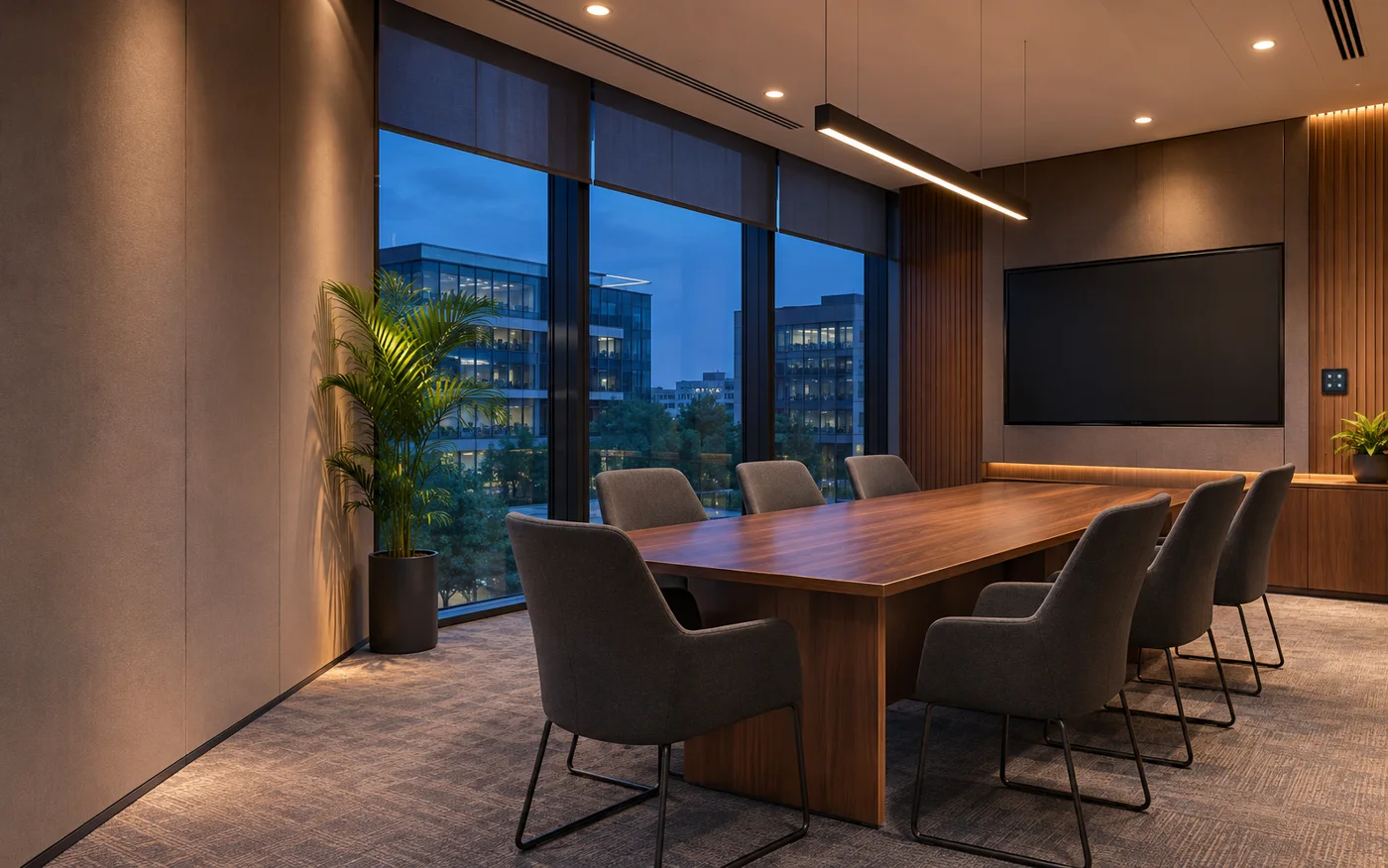
Map the work floor, meeting rooms, reception and support areas. They do not share the same occupancy pattern. A room used for three meetings a day should not be treated like a continuously occupied desk area.
Pair detection with a real control.
A presence sensor detects people but does not itself switch an AC or light. Specify the matching control, a suitable timeout and appropriate manual override. Seated meeting participants and ceiling fans make placement and sensitivity important.
Protect what must stay running.
Printer banks and selected dispensers may be candidates for scheduling. Server racks, network equipment and other essential systems need a separate policy. Do not put an entire support circuit on an unverified cutoff schedule.
Plan ownership with IT and facilities.
Agree network dependencies, permissions and handover documentation. Distinguish local rules from remote or cloud-dependent functions. Test a real room before extending a rule across a whole floor.
Use the model to ask better questions.
The workplace model lets you compare desk, meeting, reception and support zones. Its empty-zone test explains the assumed response after a timeout; monthly estimates remain separate and explicitly illustrative.
Keep exploring.
- U.S. Department of Energy — Thermostats
- U.S. Department of Energy — Lighting controls
- NEPRA — Pakistan’s electricity regulator
For model-specific dependencies, consult the selected product’s technical documentation. Our savings methodology explains the website’s illustrative assumptions.